
The Number One Question We Get About Kitchen Remodeling
If you're thinking about remodeling your kitchen, the first question on your mind probably isn't about countertop materials or cabinet finishes. It's this: How long is this going to take?
It's a fair question. Your kitchen is the most-used room in your home, and living without it — even temporarily — can feel overwhelming. At Cedar Wood Construction, we've guided hundreds of San Diego homeowners through kitchen renovations, and we've learned that the best way to reduce stress is to set clear expectations from the start.
So here's a realistic, week-by-week look at what a typical kitchen remodel involves, how long each phase takes, and what you can do to keep things moving smoothly.
Before the Clock Starts: The Planning Phase
Before any demolition happens, there's a critical planning stage that most homeowners underestimate. This phase usually takes 3 to 6 weeks and includes:
- Design and layout decisions — Finalizing your floor plan, choosing materials, and selecting appliances
- Permits — In San Diego, most kitchen remodels that involve electrical, plumbing, or structural changes require permits from the city's Development Services Department
- Material ordering — Custom cabinets alone can take 4 to 8 weeks to arrive, so early ordering is essential
- Contractor scheduling — Aligning subcontractors for plumbing, electrical, and other specialty work
This is the phase where patience pays off. Rushing through planning almost always leads to delays and budget overruns later. We work with our clients to nail down every detail before we pick up a single tool.
Week 1: Demolition and Discovery
This is when things get real. During the first week, the existing kitchen is carefully torn out — cabinets, countertops, flooring, backsplash, and sometimes walls. It's loud, it's dusty, and it's exciting.
It's also the week when surprises can show up. Once walls are opened, we occasionally find outdated wiring, old galvanized plumbing, water damage, or even code violations from previous work. In older neighborhoods like La Mesa or parts of Chula Vista, this is more common than you'd think.
Pro tip: Build a 10-15% contingency into your budget for the unexpected. If you don't need it, great. If you do, you'll be glad it's there.
Weeks 2-3: Rough-In Work
With the old kitchen stripped away, the behind-the-scenes work begins. This is the phase most people never see but it's arguably the most important:
- Electrical rough-in — Running new circuits for appliances, adding outlets to meet current code, and installing lighting wiring
- Plumbing rough-in — Relocating or upgrading water supply lines and drains if your layout is changing
- Structural modifications — If you're removing a wall to open up the kitchen to a dining or living area, this is when headers and beams go in
- HVAC adjustments — Rerouting ductwork if needed
At the end of this phase, the city inspector comes out to verify everything is up to code before walls get closed up. This inspection step is non-negotiable and protects you as the homeowner.
Weeks 3-4: Drywall, Patching, and Prep
Once rough-in work passes inspection, drywall goes up. Walls and ceilings are patched, taped, mudded, and sanded smooth. It doesn't look like much yet, but your kitchen is starting to take shape.
This is also when we handle any subfloor repairs and prepare the space for new flooring. If your remodel includes new tile, hardwood, or luxury vinyl plank, the substrate needs to be level and solid before installation begins.
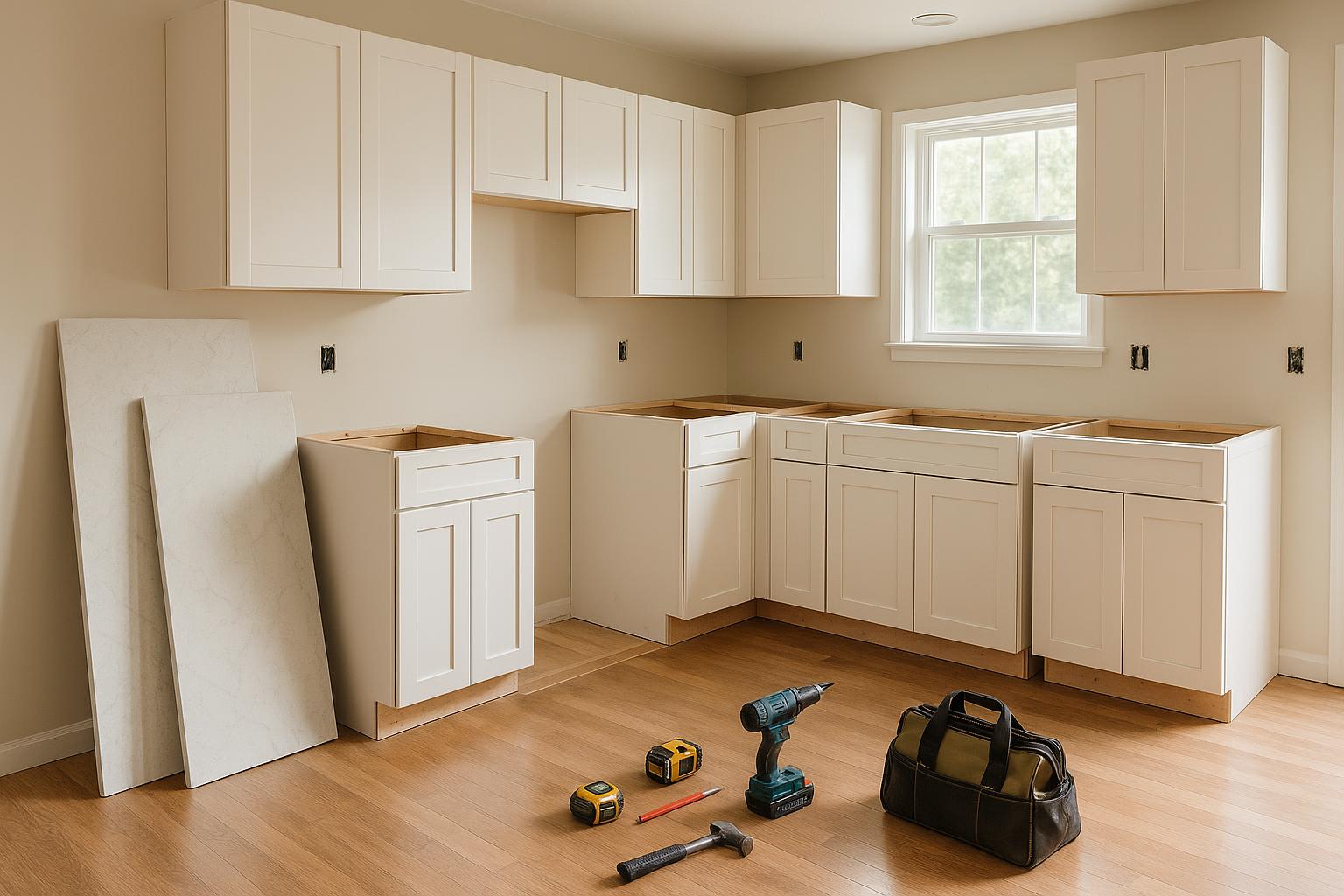
Weeks 4-5: Cabinets and Major Installations
This is the week that gets homeowners genuinely excited. Cabinets are installed, and suddenly the room looks like a kitchen again. Here's what typically happens:
- Base and wall cabinets are set and leveled
- Cabinet hardware is installed
- Countertop templates are measured (if you're going with natural stone or quartz, fabrication takes another 1-2 weeks after templating)
While waiting on countertops, other work continues — painting, trim installation, and flooring can often happen in parallel to keep the project on schedule.
Weeks 5-7: Countertops, Backsplash, and Finish Work
Now the kitchen really comes together. Countertops are installed, followed by the sink, faucet, and garbage disposal. The backsplash goes up — whether it's classic subway tile, modern large-format porcelain, or something more custom.
Finish work during this phase includes:
- Appliance installation and hookup
- Light fixtures and under-cabinet lighting
- Outlet covers and switch plates
- Final paint touch-ups
- Caulking and sealing
- Cabinet door adjustments
This is the detail-oriented phase where craftsmanship really shows. It's the difference between a kitchen that looks good from a distance and one that looks flawless up close.
Week 7-8: Final Inspection and Walkthrough
The city inspector returns for a final sign-off, verifying that all permitted work meets San Diego building codes. Once that's approved, we schedule a walkthrough with you to review every detail.
During the walkthrough, we create a punch list — a final checklist of any minor adjustments, touch-ups, or tweaks. Maybe a cabinet door needs a slight adjustment or a paint edge needs cleaning up. We don't consider the job done until you're completely satisfied.
So How Long Does a Kitchen Remodel Really Take?
For a mid-range to high-end kitchen remodel in San Diego, you should plan for 6 to 10 weeks of active construction, plus 3 to 6 weeks of planning and material lead time beforehand. Smaller updates — like refacing cabinets and swapping countertops — can be done in as little as 2 to 3 weeks.
The biggest factors that affect your timeline include:
- Scope of work — A layout change takes longer than a cosmetic refresh
- Material lead times — Custom cabinets and specialty tile can add weeks
- Permit processing — San Diego permit timelines vary depending on the scope
- Decision-making speed — Delayed material selections are the number one cause of project delays we see
How to Keep Your Kitchen Remodel on Track
After years of remodeling kitchens across San Diego, El Cajon, National City, Coronado, and surrounding communities, here's what we tell every client:
- Make all your selections before construction starts. Tile, countertops, fixtures, appliances, paint colors — all of it.
- Set up a temporary kitchen. A microwave, coffee maker, and small fridge in another room will save your sanity.
- Communicate openly with your contractor. If something doesn't look right or you have a question, speak up early.
- Trust the process. There will be a point mid-project where your kitchen looks like a disaster zone. That's normal. It gets better fast.
Ready to Start Planning Your Kitchen Remodel?
At Cedar Wood Construction, we believe a great remodel starts with honest communication and a clear plan. We'll walk you through every step — from initial design to final walkthrough — so you always know what's happening and what's coming next.
If you're a homeowner in San Diego and you've been thinking about transforming your kitchen, we'd love to talk. Reach out to us for a free consultation, and let's build the kitchen you've been dreaming about — on time and without the runaround.